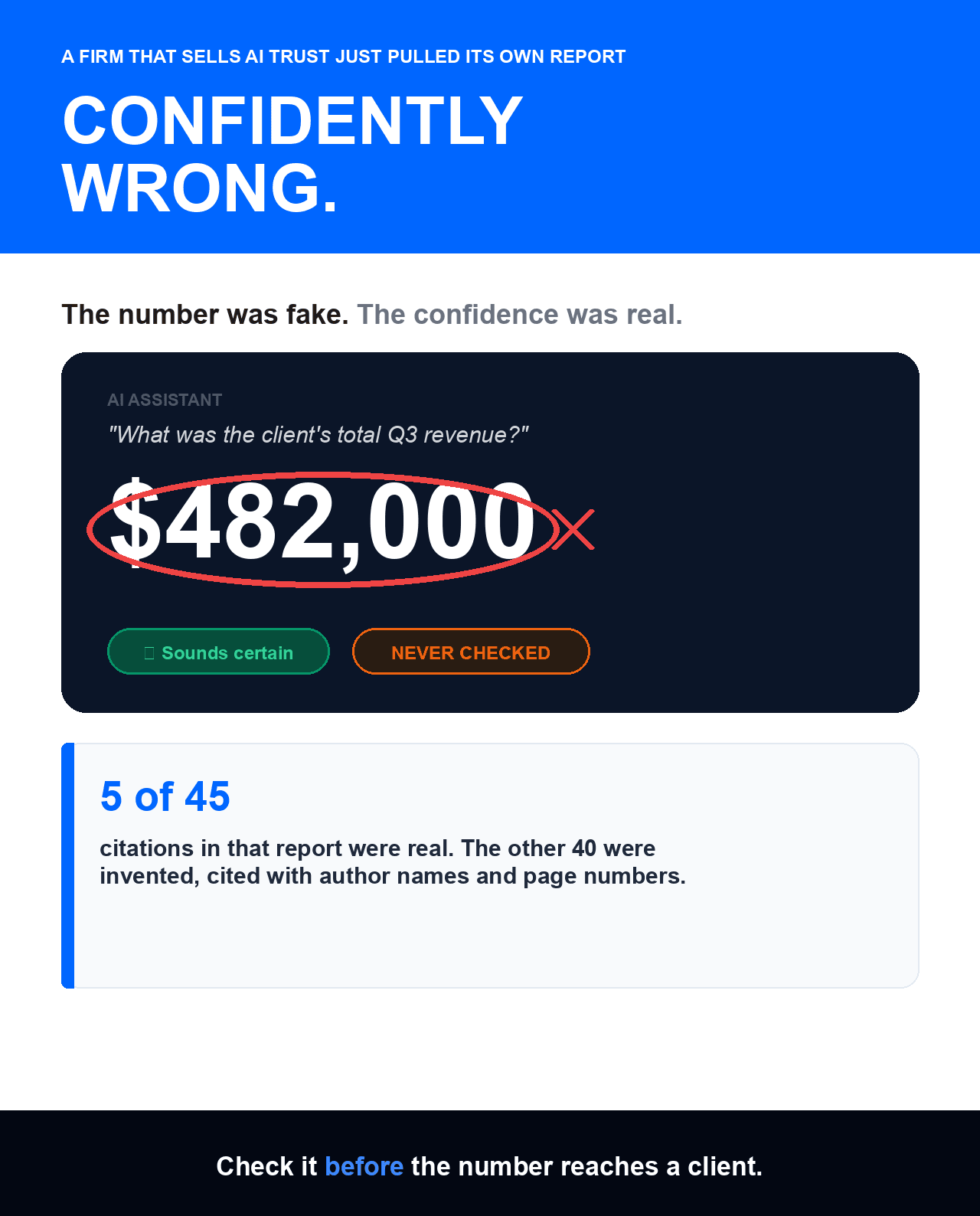
A firm that sells AI trust to clients just had to pull its own AI report for being wrong. KPMG published a report on agentic AI, citing 45 sources on how firms should build trust into their systems. Someone finally checked the citations. Only 5 pointed to something real. The other 40 were invented by the model.
Studies that never existed were cited with page numbers and author names that sounded completely legitimate. Nobody caught it before it went out. This is not really a story about KPMG. It is a preview of what happens at any firm that treats AI output the way it treats a first-year associate's first draft: assume it is basically right and move on.
The Danger of Confident Mistakes
Right now 46% of accountants use AI every day. 62% say they are worried it will get something wrong. One CPA who runs tax questions through Claude daily says it makes a mistake in almost every conversation, just confidently enough that you would not notice unless you already knew the answer.
The models are designed to predict the next word, not to seek the truth. When asked for supporting evidence, they will fabricate professional-sounding journals, authors, and page numbers because that is what a legitimate bibliography looks like.
Moving from Guesswork to Verification
The firms pulling ahead this year are not the ones using the most AI. They are the ones who built a habit of checking it before a number reaches a client.
That habit gets a lot easier when the AI is actually working from your own engagement files and prior returns instead of guessing, and every answer can be traced back to the document it came from. Retrieval-Augmented Generation (RAG) grounds the LLM in real data, giving your team instant verification.
The Gap to Close
Ask about the last AI-generated number your firm sent to a client. If nobody can point to the source in five seconds, that is the gap to close first. Implementing a robust verification workflow is the only way to safely build AI into professional services.
Join the Conversation
How does your firm currently verify that AI-generated numbers and references are completely accurate?